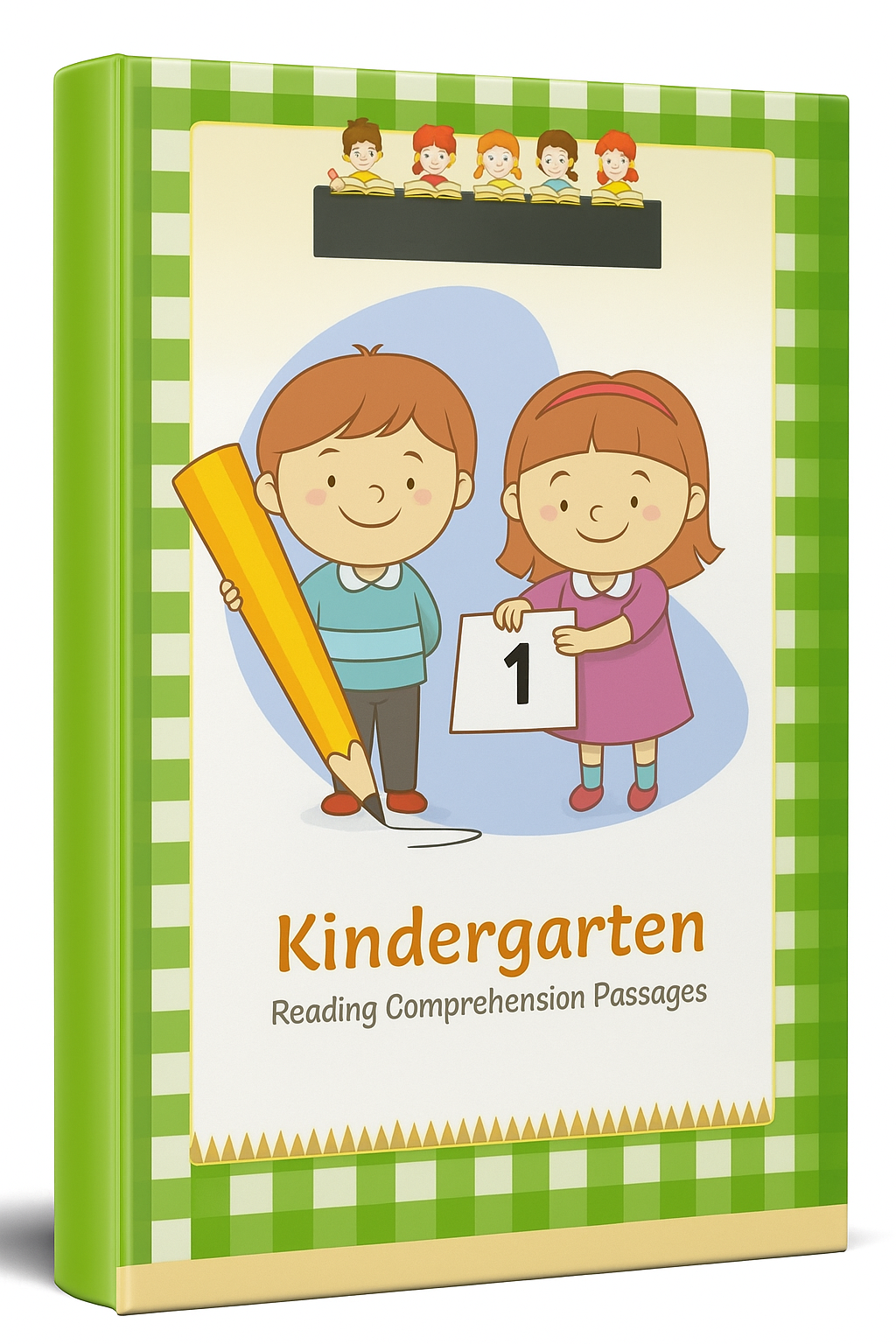
About This Book
This is a set of easy reading comprehension passages for kindergarten: short controlled-vocabulary texts about familiar everyday topics, each with simple questions — recall, sequence and first prediction — for readers aged about 4 to 6.
What Young Readers Will Do
Read Tiny Texts That Make Sense
Short passages about pets, family, play, food and seasons — written with decodable, repeated vocabulary so a beginning reader finishes every one successfully.
Answer Real Questions
Who, what and where questions first, then why and what-next — comprehension practised at speaking level before writing level, with picture-friendly response formats.
Build the Reading Habit
One passage at a time, reread with pride: fluency, confidence and the expectation that print means something — the three foundations of every later reader.
Key Features
The controlled vocabulary is the feature — success is engineered, not hoped for. The question design is the second: comprehension from the very first year of reading, in formats small children can actually answer. The print-and-go format is the third, for classrooms and kitchens alike.
Who This Book Is For
It is for kindergarten and early-years teachers, parents and homeschoolers of 4–6-year-olds, reading intervention and ESL teachers of young beginners, and tutors building first comprehension skills.
How to Use This Book
Read the passage aloud together first, then let the child read it — echo and choral reading are bridges, not cheating. Ask the questions conversationally before any are written; oral answers are real comprehension. Reread favourites across the week: the second and third readings are where fluency visibly grows.
Related Books
A first classic novel for growing readers is To kill a Mockingbird. School English for the next stage is Oxford Progressive English Grade 7.